Navigation
About Us
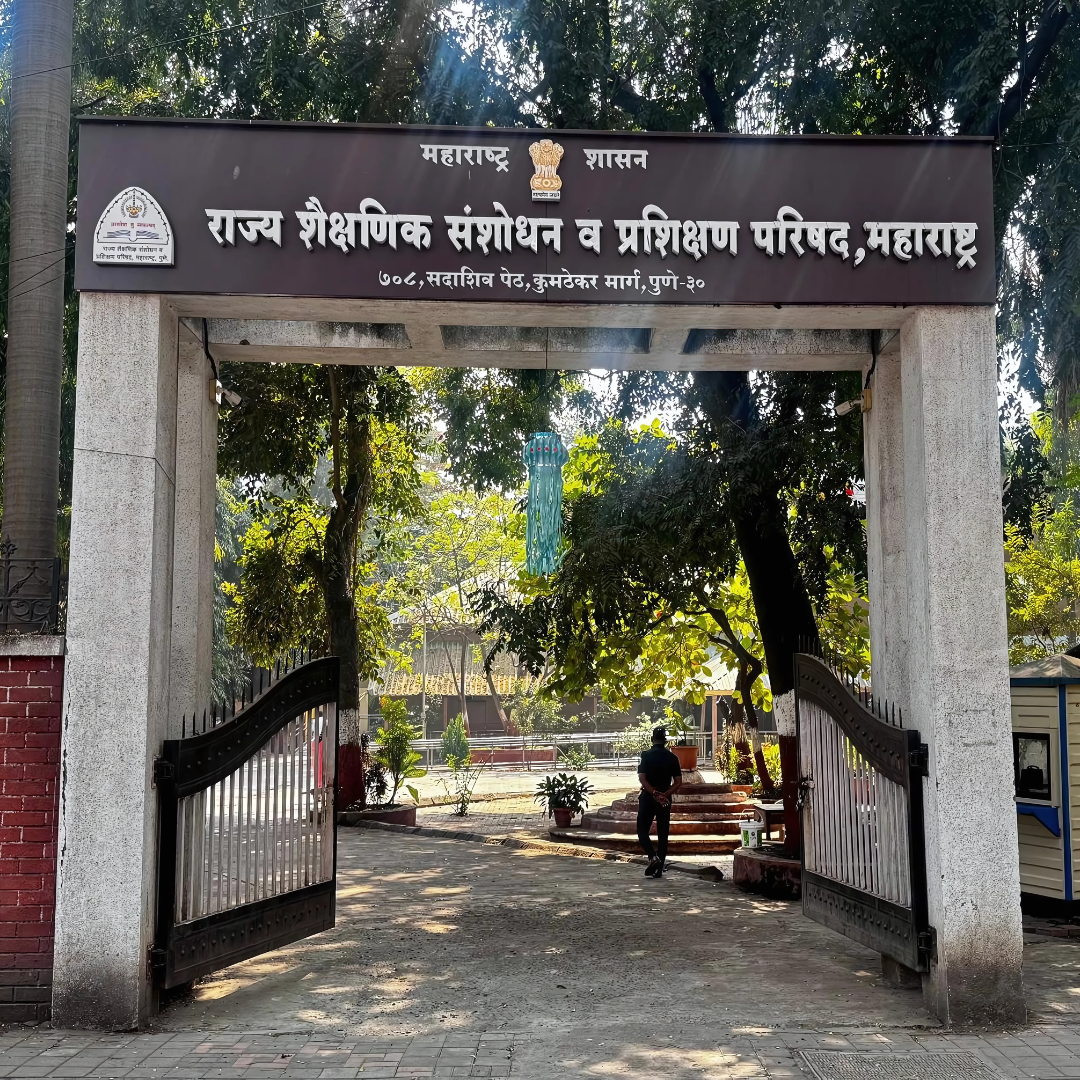
As per the Government Resolution dated 29 October 1963, the State Institute of Education was established in January 1964 with the objective of improving the quality and standards of education in the State. Subsequently, as per the Government Resolution dated 11 August 1984, various state-level government educational institutions were merged with the State Institute of Education, and in 1984 the institute was renamed as the Maharashtra State Council of Educational Research and Training (MSCERT), Pune. As per Section 29 of the Right of Children to Free and Compulsory Education Act, 2009, through the Government Resolution dated 17 October 2016, the Maharashtra State Council of Educational Research and Training, Pune was declared as the “Academic Authority”. Further, as per the Government Resolution dated 24 August 2017, the name “Academic Authority, Maharashtra State, Pune” was changed to “Maharashtra Academic Authority, Pune”. Thereafter, as per the Government Resolution dated 1 June 2018, the institution was renamed as the Maharashtra State Council of Educational Research and Training (Academic Authority), Pune. Subsequently, as per the Government Resolution dated 29 November 2019, the name of the Maharashtra State Council of Educational Research and Training was changed to “State Council of Educational Research and Training, Maharashtra”, and in English as “State Council for Educational Research and Training, Maharashtra (SCERT Maharashtra)”.
Functions (as per Government Resolution of the School Education Department dated 17 October 2016):
1) To study national and international definitions of quality and to establish benchmarks for improving the quality of education in the State. These benchmarks shall be revised from time to time as required.
2) For achieving the defined benchmarks:
• Curriculum development
• Syllabus development
• Development of textbooks and other learning materials
• Continuous professional development of teachers and officers
• Development of assessment processes
• Conducting research to overcome challenges
Maximum use of Information and Communication Technology (ICT) and computer technology shall be ensured for all the above activities.
3) To clearly define learning indicators at all levels for achieving benchmarks and to establish their correlation with Continuous and Comprehensive Evaluation (CCE) or other assessment processes.
4) While developing curricula, syllabi, learning materials, and while planning professional development programmes for teachers and officers, to emphasize competency-based thinking. Under the Right to Education Act, education must be provided to 100% of children; however, it is observed that many teachers and officers lack confidence that all children can learn. One of the root causes is inadequate understanding of learner capacities. Recognizing human diversity in terms of physical attributes, beliefs, caste, economic background, geographical location, and urban–rural residence, and reinforcing the concept that all individuals are equal, is a crucial component of empowerment. The Council shall continuously work towards this objective, keeping in mind that understanding interdependence among diverse individuals strengthens the concept of learner capacity. This will be discussed in detail under the functions of the Capacity Development Division.
5) To develop materials for various learning and development opportunities such as open and distance learning, self-learning, group and center-level discussions, online self-learning and discussions, certification programmes, or various combinations of these modes.
6) To enhance the capacity of all stakeholders, including District Institutes of Education and Training (DIETs), block- and cluster-level resource persons, and all components related to teacher empowerment.
7) To ensure effective and continuous functioning, the Council shall select its members through a defined process and plan continuous professional development for them, so that stagnation does not occur at the Council level. In this manner, a culture of continuous learning will be fostered, linked not to financial gain but to the acquisition of knowledge.
8) The success or failure of the Academic Authority shall be measured solely by whether children are progressing in accordance with the established benchmarks. Thus, the Authority shall evaluate its own success or failure through the assessment of student progress.
9) Detailed documentation of the functions of various departments of the restructured Council shall be prepared with the objective of building a progressive educational Maharashtra aligned with national and international benchmarks. For this purpose, capacity building of members selected through the recruitment process of the restructured Council will be essential. During this capacity-building process, detailed departmental work plans will be prepared approximately every six months. These documents shall be published with government approval at the appropriate time.